
JB. INSTITUTE
It is a platform for creating publications or objects in close collaboration and with a personal approach with artists, writers or designers. Recurring themes can originate from skateboarding or music culture, documentary photography, painting or interventions in public space. Depending on the content, each publication, each object gets its own purpose and appearance and varies in the edition.
Founded originally in 2004 in the realm of electronic music in Berlin, publishing a music and art magazine in digital and print between 2006 and 2014, focusing on making zines, books, objects and art prints since then.
JB. Institute occasionally curates art shows, especially for the release of new publications.
Artists: 44flavours, Pierre Descamps, Dela Charles, Eriz Moreno, Tessa Perutz, Daniel Rich, Cody Hudson, Jeroen Erosie, Tim Head, Jenne Grabowski, Otto Grokenberger, Quentin Chambry, Tobias Bärmann, and more.
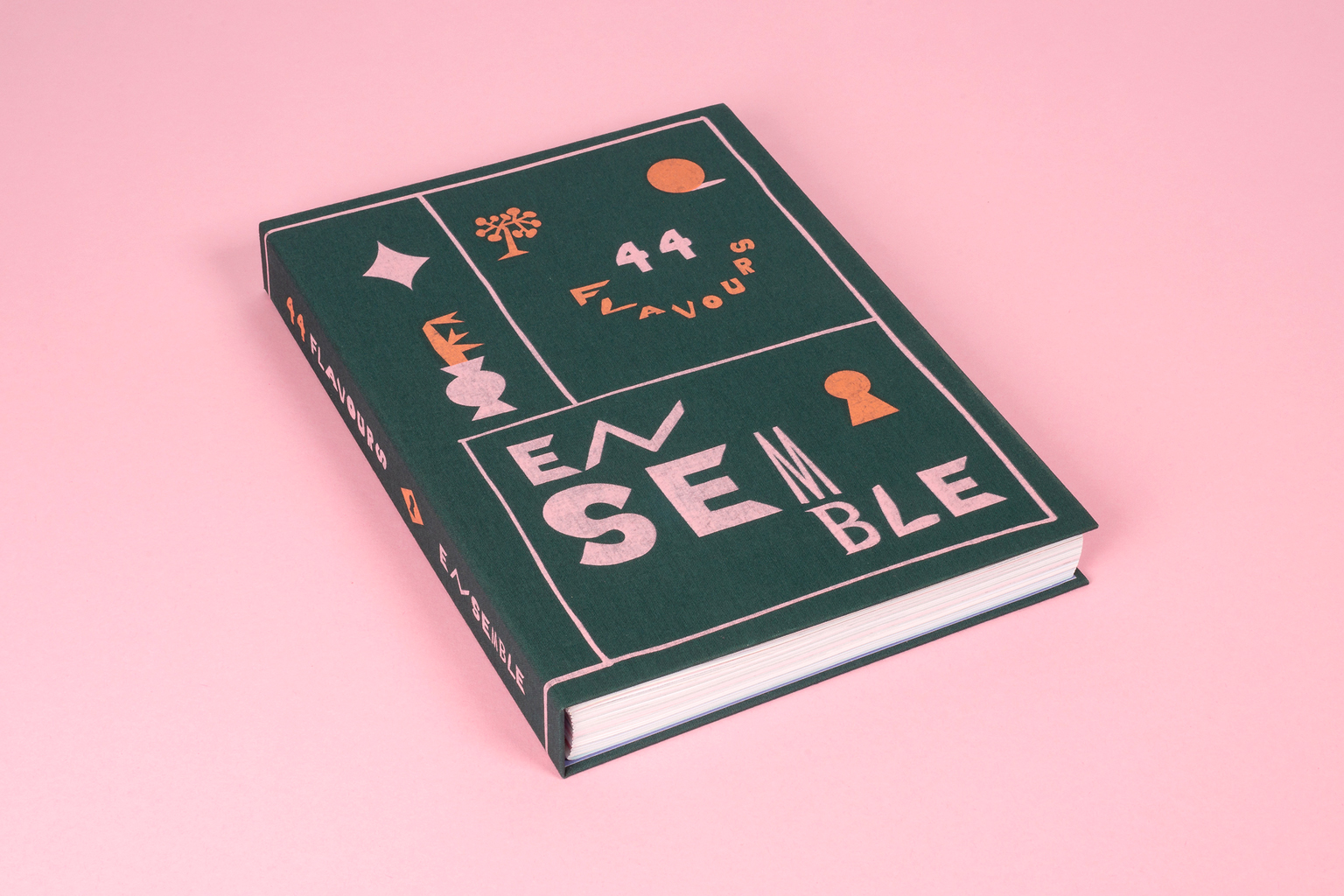
“ENSEMBLE” is the first book by 44flavours and showcases a 20-year creative journey.
Sebastian Bagge and Julio Rölle have been working together as the artist duo 44flavours for over 20 years. The book contains a careful selection of their projects and works from the last two decades, documenting the development and dynamics of their artistic collaboration.
“In the book, we look at our backgrounds and the dynamics of our collaboration: What context do we come from? How did we develop together? Another focus is on our installation work and our experimentation with different materials, with bricolage playing a major role. Overall, our research into painting and the exploration of physical and imaginary spaces is covered.
The main influences on our work can be filtered out as follows: encounters with other positions, investigating certain materials and learning techniques, discovering new places and ways of thinking, social exchange, and the activation and exploration of work processes in exchange with others, the development of a dynamic that leads to new ways of working and results, playful exploration, discovery, trial and error.”
Julio Rölle & Sebastian Bagge
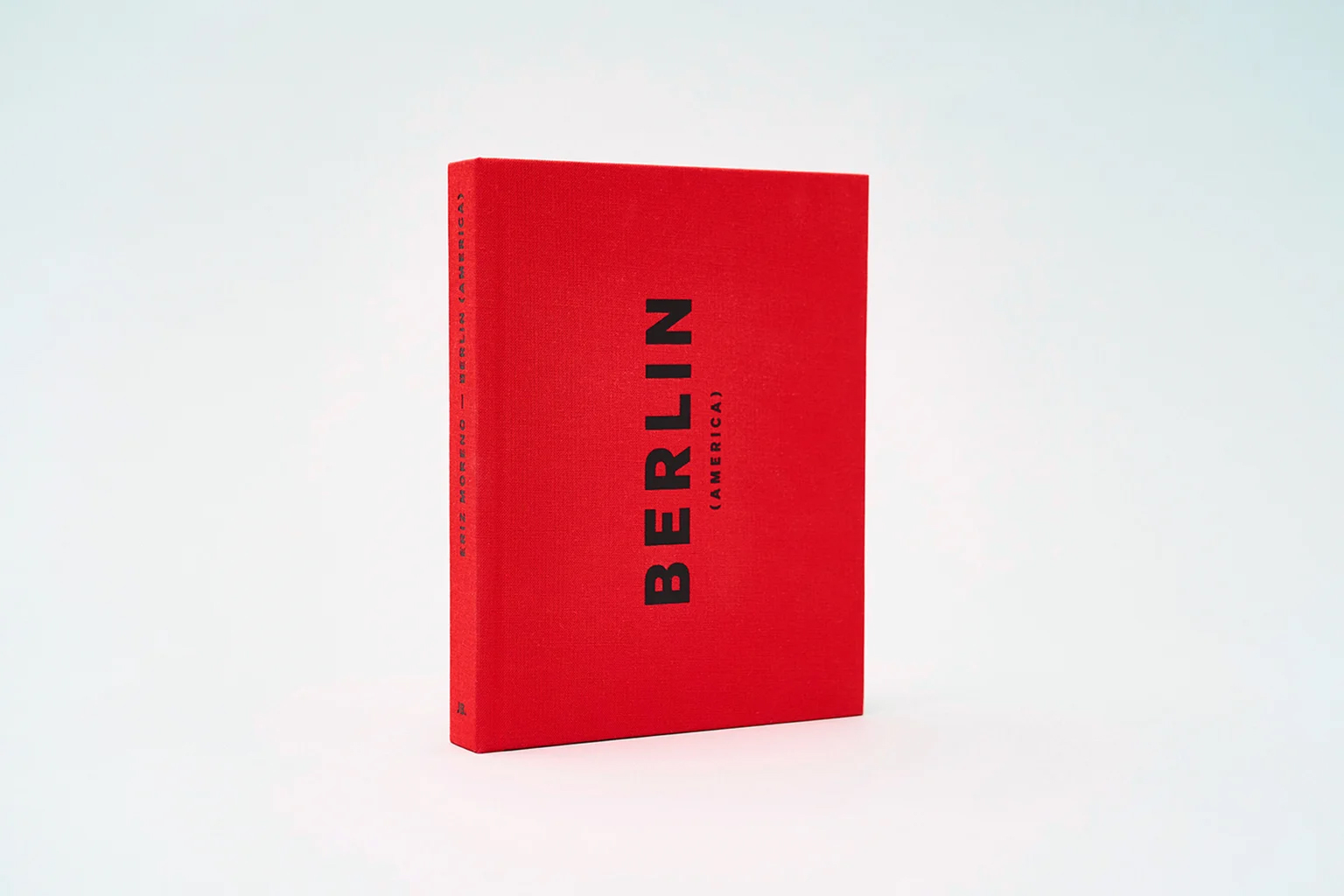
In his photographic work Berlin (America), Eriz Moreno shows all 30 places in the USA with the name Berlin and takes a surprising look at the subject of the road trip.
In his photographic projects, Spanish artist Eriz Moreno interweaves history and the present day, seeking to grasp the historical dimensions in landscapes shaped by humanity. Works such as Beton (Concrete), Transfăgărășan or Bratstvo / Jedinstvo visualize large-scale, built projects as symbols of national identity. To make Berlin (America), Moreno embarked on a journey to all thirty of America’s municipalities identified as “Berlin” on the map; a trip of 43 days and 21,394 kilometres across 27 states. In a sense, the American myth of the country’s settlement by immigrants from all over the world, including Germany, was founded here on the prairie. The outcome is a compendium of 2430 slides, with 81 motifs from each place. Other shots from the journey as well as a road-trip video documentary complete the project, generating their own pictorial spaces and visual moments: desolate scenes with characteristic motifs and colours that seem to resemble each other in a strange and somewhat irritating manner. Berlin (America) is like a journey into the open, with no beginning and no end. The book comprises 240 photographs and includes a text by Franziska Schmidt.
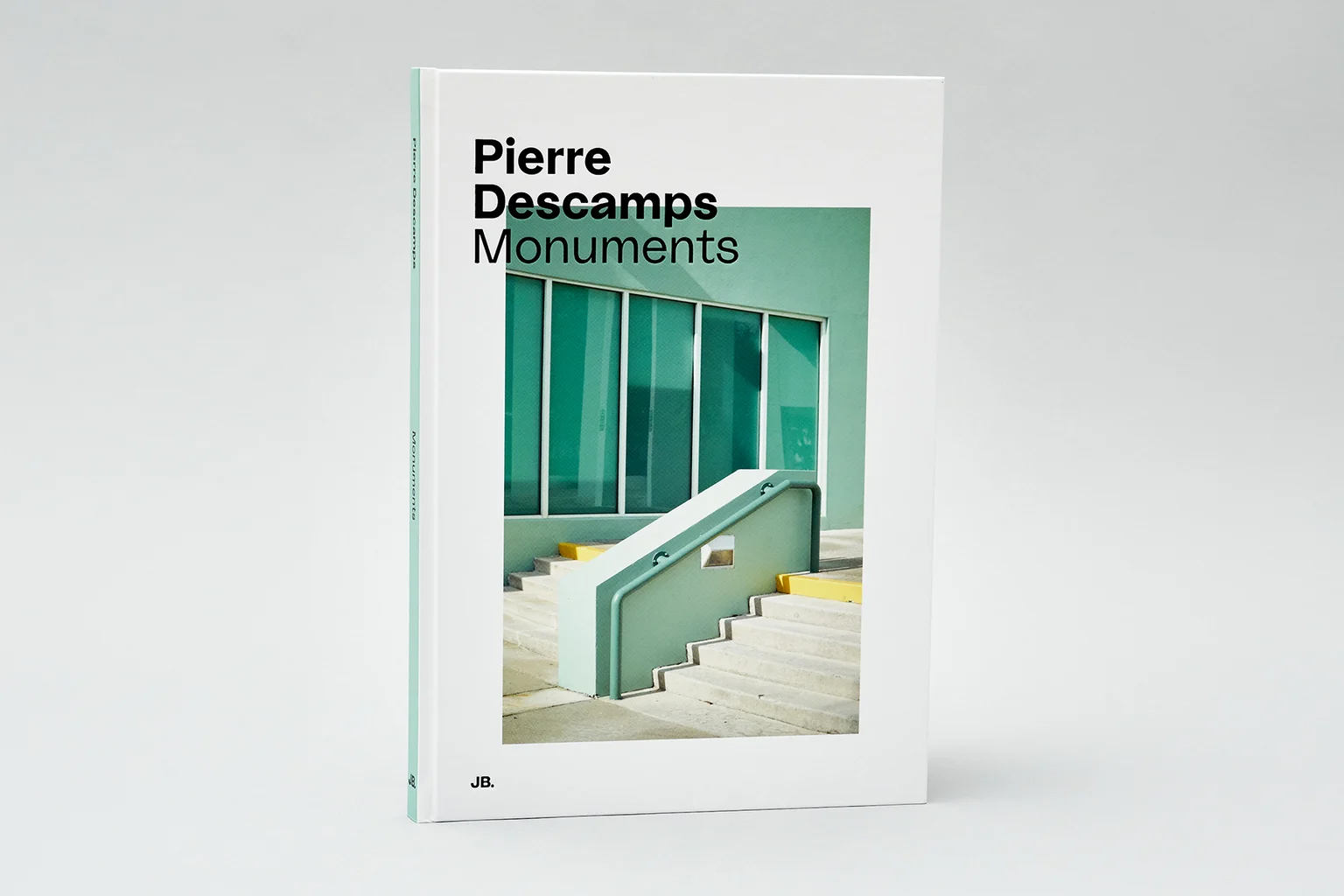
“Having started skateboarding in the late eighties, I cannot help seeing the city and its forms as an infinite playground – one eye constantly observing all the architectural forms. Steps cease to be steps, handrails cease to be handrails, sidewalks cease to be sidewalks. They all become abstract forms open to reinterpretation: they can be perceived as ready-made sculptures, or equally as an inventory of skateable forms.
In 2006, I spontaneously started taking photographs of architectural spaces that skaters could use. I soon realised that the most accomplished pictures recall specific codes of skateboarding photography. Their focus, lighting, and perspectives are arranged to magnify the space where the action is taking place.” Pierre Descamps
You are currently viewing a placeholder content from Facebook. To access the actual content, click the button below. Please note that doing so will share data with third-party providers.
More InformationYou need to load content from reCAPTCHA to submit the form. Please note that doing so will share data with third-party providers.
More InformationYou are currently viewing a placeholder content from Instagram. To access the actual content, click the button below. Please note that doing so will share data with third-party providers.
More InformationYou are currently viewing a placeholder content from X. To access the actual content, click the button below. Please note that doing so will share data with third-party providers.
More Information